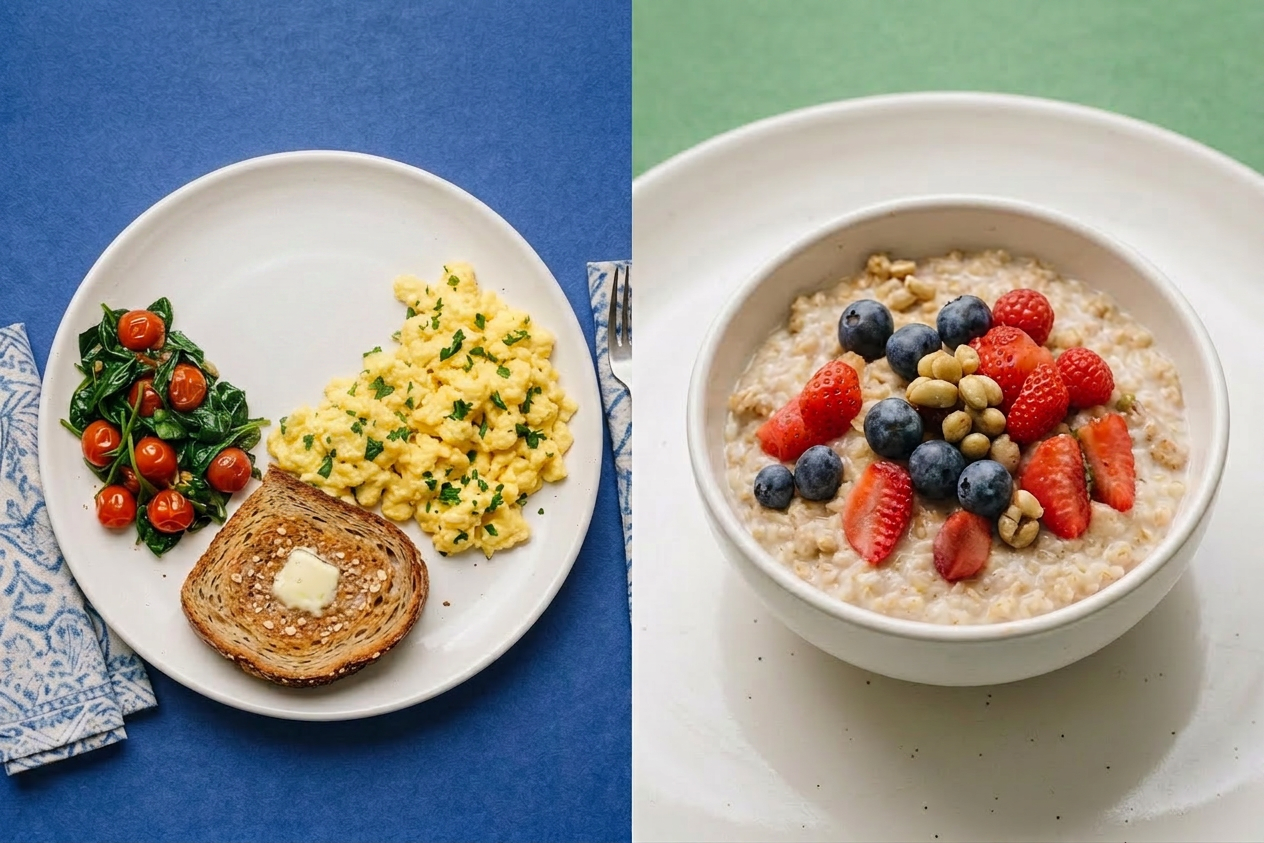
Many of my clients come to our first session with the same question:
“What is the best diet for PCOS?”
Many of us have heard the same nutrition advice: Eat more vegetables, eliminate sugar, add supplements.
This may not be wrong, but is a standard diet plan built for you?
Here is where a personalized nutrition plan steps in.
Research shows that tailoring nutrition to the person with PCOS — rather than a one-size-fits-all approach — can work better in the long-run.
Let’s break down why.
Your Body Doesn’t Respond Like Everyone Else’s
One of the core ideas behind personalized nutrition is simple: people respond differently to the same foods. Of course, also we don’t all actually LIKE the same foods. And some foods we can’t even find where we live. Don’t get me started on price…
Factors like genetics, metabolism, the gut microbiome, lifestyle, and even sleep patterns influence how your body processes nutrients. Research shows that even identical twins can have very different metabolic responses (for example, the body chemicals released and when, or how the body absorbs and uses the nutrients) to the same meal.
A personalized plan factors in these differences, helping to point to what actually works for your body. Here’s where a licensed registered dietitian comes in and can do more for you than one social media influencer or well-meaning nutritionist without key medical training.
Better Results — Because the Plan Fits Your Life
In the 2025 study, “The Role of Lifestyle Interventions in PCOS Management: A Systematic Review,” the authors realized something big. By looking at 80 studies on humans (not rats) from the last 10 years, they figured out that the “perfect” PCOS diet is not just the one that boosts your health, it’s the one you can actually stick to. That means that when nutrition recommendations line up to your preferences, habits, and daily routine, you’re more likely to follow through.
Personalized diet plans can lead to real improvements in labs, weight, cycle, and overall health compared to generalized advice.
In other words, personalization — making the plan for YOU — doesn’t just optimize, it makes it livable.
More Targeted Improvements in Health
| INSTEAD OF… | TRY TO… |
| Aiming for big ideas like “eating healthier” | Focus on simple, specific changes |
| Cutting out all sugar | Review of your lifestyle and diet to target the habits that are hardest on your blood sugar regulation |
| Taking $$$ supplements from targeted ads | Compare your symptoms and goals to the evidence from peer-reviewed research, and start small so you can figure out what actually works FOR YOU |
| Going gluten or dairy-free after someone said it worked for them | Working with an expert to figure out what might be causing your inflammation, and get with making changes you can live with |
| Using probiotics every day but not knowing why | Get more information about gut health, discover the step-by-step strategies needed to help your microbiome, and use a clear plan moving forward |
By looking at individual lab results, biomarkers, responses to medications or other treatments, a personalized PCOS lifestyle plan can address root causes, not just symptoms.
4. It Moves Beyond Dieting — & Toward Understanding
Traditional diets often rely on restriction and rules. Personalized nutrition shifts the focus to feedback and learning. The question should be, “what actually supports my body best?” and not “What do I need to cut out this week?”
Working with a dietitian is an approach that builds long-term awareness and independence when it comes to taking care of yourself.
You begin to understand how your body responds to certain foods, habits, and patterns — making choices more intuitive and boosting your confidence over time.
5. A More Sustainable, Long-Term Approach
One of the most overlooked benefits of a personalized diet plan is that it’s sustainable — meaning, it’s a lot easier to stick with.
Generic plans often fail because they ignore real-life complexity — culture, access, stress, time, and emotional relationships with food.
Personalized nutrition integrates those factors. It adapts with you.
And that adaptability is what makes it work.
The Bottom Line
The research points in a clear direction: nutrition works best when it’s personal.
A personalized diet plan goes beyond a perfect diet — it is a supportive guide toward a way of eating (and living) that can meet your health goals. It meets you where you are now, responds to your body, and evolves with your life.
And in the world full of conflicting, confusing nutrition advice, that kind of clarity is powerful.
References
- Gautam R, Maan P, Jyoti A, Kumar A, Malhotra N, Arora T. The Role of Lifestyle Interventions in PCOS Management: A Systematic Review. Nutrients. 2025 Jan 16;17(2):310. doi: 10.3390/nu17020310. PMID: 39861440; PMCID: PMC11767734.
- Gustafson CR, Gitungwa H, Boron JB, Rose DJ. Personalizing product sets to individual health priorities increases the healthfulness of hypothetical food choices in US adults. Sci Rep. 2025 Mar 7;15(1):7981. doi: 10.1038/s41598-025-92784-1. PMID: 40055447; PMCID: PMC11889152.
- Bermingham KM, Linenberg I, Polidori L, Asnicar F, Arrè A, Wolf J, Badri F, Bernard H, Capdevila J, Bulsiewicz WJ, Gardner CD, Ordovas JM, Davies R, Hadjigeorgiou G, Hall WL, Delahanty LM, Valdes AM, Segata N, Spector TD, Berry SE. Effects of a personalized nutrition program on cardiometabolic health: a randomized controlled trial. Nat Med. 2024 Jul;30(7):1888-1897. doi: 10.1038/s41591-024-02951-6. Epub 2024 May 8. PMID: 38714898; PMCID: PMC11271409.

