
Starting a GLP-1 (Ozempic, Mounjaro, Zepbound, etc) to help with metabolic issues, menstrual regularity and weight loss if you have polycystic ovarian syndrome (PCOS) can feel a little like finally someone SOMETHING has your back — like you’re not doing this the hard way anymore.
Appetite might be easier to manage, sweet cravings go silent, and blood sugar levels become less chaotic. Things can start to click in a new way.
As a registered dietitian and certified diabetes expert who has worked with countless women with obesity, PCOS, and insulin resistance, I want to be honest:
Starting a GLP-1 is not a magic wand moment.
The real transformation still lives in the small, daily choices that support your health, hormones, and healing. Your rhythm through the day, and across the month of your cycle, matter deeply.
Think of the medication as opening the door to health a bit wider. And now it’s time to think about what you want to build on the other side of that door.
This might mean, thinking beyond the weight on the scale. Or looking at a bigger, bolder understanding of your health needs and goals. Just remember, less isn’t always more.
The conventional lifestyle goals for PCOS: Eat less, lose as much weight as possible. Take a GLP-1 to get you there fast, no matter the risks.
A wise woman’s approach: Aim to nourish your body with regular, balanced meals and snacks, stay hydrated, improve your fitness and strength, and get a good night’s sleep as often as possible. Add a GLP-1 to help quiet the noise, making it easier to work on (and safely reach) your goals.
While the conventional approach does seem simpler, here’s a friendly but very serious heads up: It may be dangerous.
A few known risks with using a GLP-1 medication:
- On-going digestive issues, like nausea, vomiting, diarrhea and constipation
- Daily experience of not eating enough or dehydration, like feeling weak, fatigued, light-headed, or dizzy
- Nutrient deficiencies (malnutrition!?) that could over the long-run lead to complex health issues
- Loss of lean body mass (think, bone and muscle), that could permanently slow metabolism (yikes!!!)
The fact is that EXPERTS recommend anyone and everyone on a GLP-1 be in a supervised exercise and nutrition program for the best results. While not being under supervision can still work for some (OK, Girl Boss!) for plenty of people, the lack of support, a fear of side effects, not getting answers, and losing TOO MUCH weight (Just Google, “Ozempic face”) lead them to give up. It’s not just the price tag that causes up to 80% of people who start these medications to stop using them.
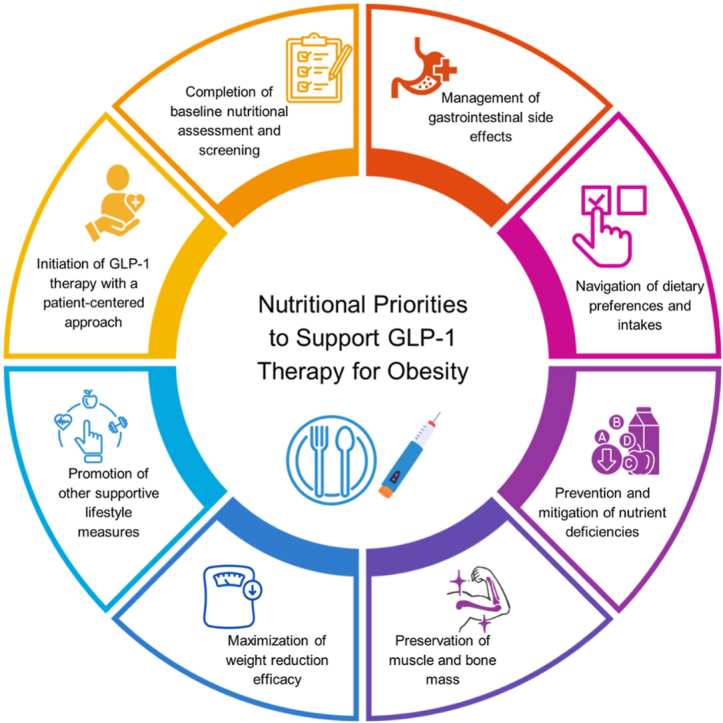
In 2025, a group of experts across clinical and research disciplines reported on the priorities for the safe use of GLP-1s. Here’s what they believe to be most important:
Ask yourself a few questions…
- Is my prescribing doctor supporting me in each of these areas, like making sure I don’t end up with nutrient deficiencies, talking about ways to protect my muscles, or going over lifestyle goals? Are they only concerned about my weight?
- Does my doctor show understanding and willingness to talk about my concerns and answer questions?
- Do I have all the information I need to make informed decisions about using GLP-1s?
- Am I willing and able to see beyond the scale and think about PCOS as more than just a weight issue?
- Do I have specifics to consider, like maintaining fertility, planning for a safe pregnancy, or having the stamina to juggle everyday work and family commitments?
- What would truly help me make the lifestyle changes needed to realize my health and wellness dreams?
If you are thinking of starting or continuing on using a GLP-1, it might be worth it to work with an expert dietitian who approaches your needs health holistically.
References
- O’Connor R. Navigating the benefits and harms of GLP-1 and GLP-1/GIP agonists in obesity. Drug Ther Bull. 2026 Jan 28;64(2):19-23. doi: 10.1136/dtb.2025.000039. PMID: 41513440.
- Minnetti M, Barazzoni R, Batsis JA, Busetto L, Yumuk V, Poggiogalle E, Weijs PJM, Donini LM. The Integration of Lifestyle Modification Advice and Diet and Physical Exercise Interventions: Cornerstones in the Management of Obesity with Incretin Mimetics. Obes Facts. 2025 Nov 18:1-16. doi: 10.1159/000548370. Epub ahead of print. PMID: 41252315; PMCID: PMC12707955.
- Bellavance D, Chua S, Mashimo H. Gastrointestinal Motility Effects of GLP-1 Receptor Agonists. Curr Gastroenterol Rep. 2025 Jul 7;27(1):49. doi: 10.1007/s11894-025-00995-3. PMID: 40622491.
- Manne-Goehler J, Franco J. Side effects of GLP-1 receptor agonists. BMJ. 2025 Aug 4;390:r1606. doi: 10.1136/bmj.r1606. PMID: 40759433.
- Urbina J, Salinas-Ruiz LE, Valenciano C, Clapp B. Micronutrient and Nutritional Deficiencies Associated With GLP-1 Receptor Agonist Therapy: A Narrative Review. Clin Obes. 2026 Feb;16(1):e70070. doi: 10.1111/cob.70070. PMID: 41549912.
- Mozaffarian D, Agarwal M, Aggarwal M, Alexander L, Apovian CM, Bindlish S, Bonnet J, Butsch WS, Christensen S, Gianos E, Gulati M, Gupta A, Horn D, Kane RM, Saluja J, Sannidhi D, Stanford FC, Callahan EA. Nutritional priorities to support GLP-1 therapy for obesity: a joint Advisory from the American College of Lifestyle Medicine, the American Society for Nutrition, the Obesity Medicine Association, and The Obesity Society. Am J Clin Nutr. 2025 Jul;122(1):344-367. doi: 10.1016/j.ajcnut.2025.04.023. Epub 2025 May 30. PMID: 40450457; PMCID: PMC12612741.
- Ceasovschih A, Asaftei A, Lupo MG, Kotlyarov S, Bartušková H, Balta A, Sorodoc V, Sorodoc L, Banach M. Glucagon-like peptide-1 receptor agonists and muscle mass effects. Pharmacol Res. 2025 Oct;220:107927. doi: 10.1016/j.phrs.2025.107927. Epub 2025 Aug 24. PMID: 40858197.
 OKAY TO EAT